Off NetSuite and onto a store they own
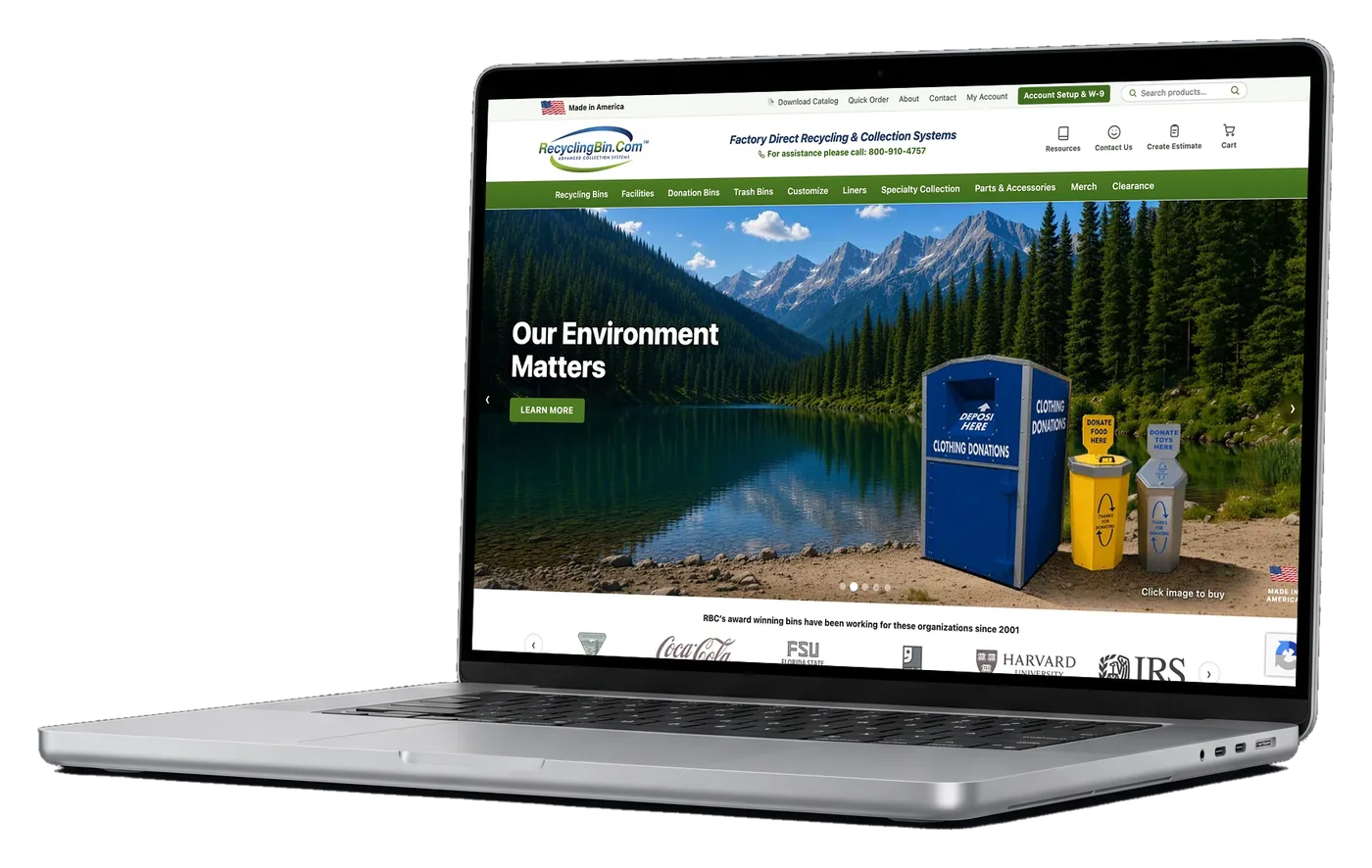
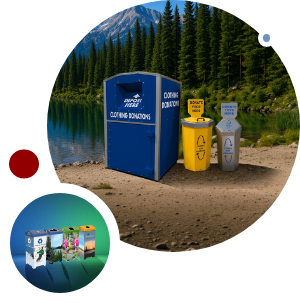
RecyclingBin.com builds recycling and collection systems in America and sells them to schools, universities, governments and businesses. Their store ran on NetSuite SuiteCommerce: expensive, dated, and hard for buyers to use. We moved them to a custom WooCommerce store they fully own, rebuilt every feature their buyers relied on, and launched in five weeks using AI-accelerated development.
A storefront that cost six figures a year
Paying enterprise prices for a store buyers struggled to use.
RecyclingBin.com has made recycling systems since 2001 and has shipped more than 300,000 of them to buyers like Aldi, Coca-Cola, Harvard and NASA. Most of those buyers are institutions, and institutions rarely buy on the spot. Someone builds a quote, purchasing approves it, and the order comes later.
The store ran on NetSuite SuiteCommerce. It cost more than $100,000 a year to license, it was built on aging technology, and buyers found it hard to use. Leaving meant moving all of their data and rebuilding every feature those buyers depended on.
We saw it as more than a platform switch. It was a chance to build a store around the way institutional buyers actually purchase, on a platform RecyclingBin.com controls.
Everything the old platform did, in code the customer now owns
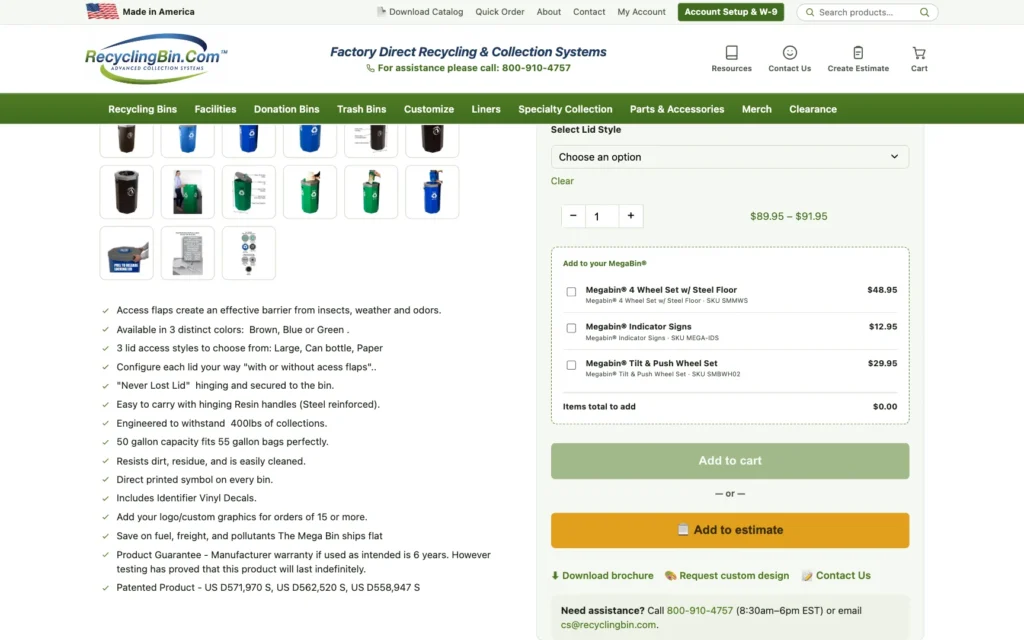
Add to estimate
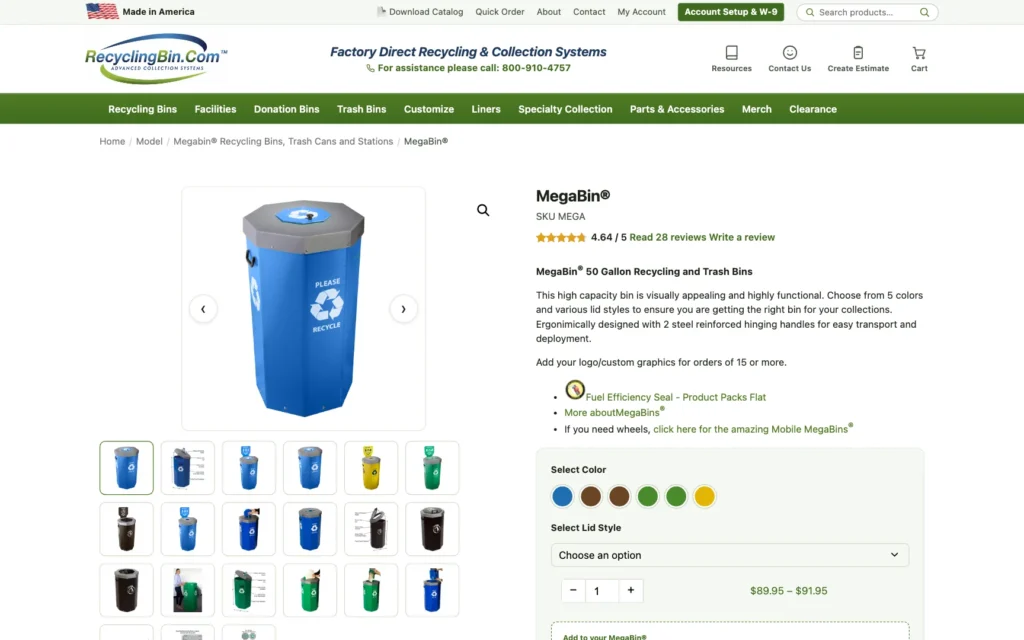
Every product page has an “Add to estimate” button next to “Add to cart.” A buyer builds an estimate, takes it to purchasing, and turns it into an order later without starting over.
Products configured the way they're built
A MegaBin comes in six colors and seven lid styles. Its add-ons carry options of their own: indicator signs come in five colors, each with a message the buyer chooses. The product page handles every combination and prices it as the buyer picks.
Reviews
Customers can rate and review products right on the product page, giving other schools and facilities a real opinion before they commit to an order. The old site needed a third party plugin for this. Now it’s built into the store.
Volume pricing
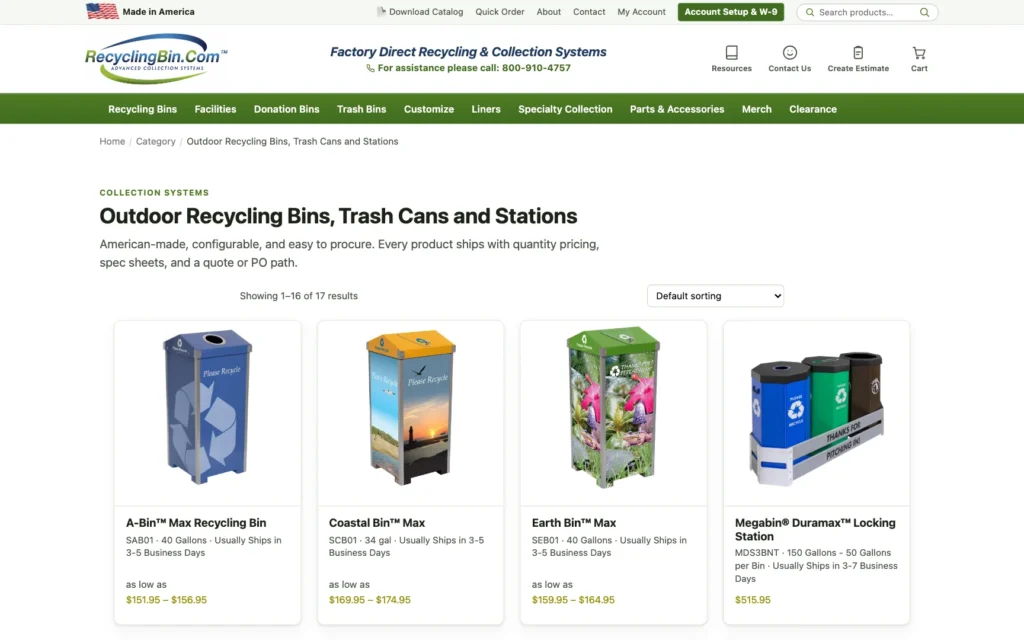
Discounts apply automatically at quantity, and the catalog shows them as “as low as” prices.
Upsells chosen per product
Add a bin to the cart and the store offers the liners that fit it. Each product has its own related items.
Data migration
We used AI to work through the NetSuite export of their almost 200 products and 30 pages and match it to the right WordPress and WooCommerce settings. The whole catalog came across quickly, and buyers picked up right where they left off.
Built to be found and used
A new design
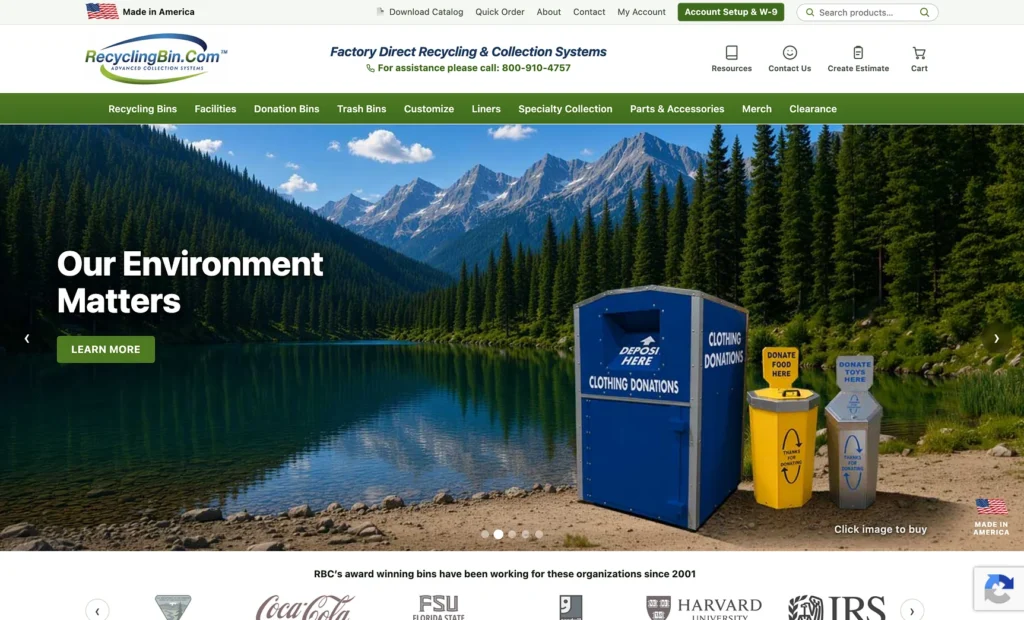
The catalog is organized the way buyers shop it: by bin type, by facility, and by what they’re collecting.
SEO and AI search
Every existing link came across, so rankings and bookmarks survived the move. Then we re-optimized the whole site for search engines and AI answer engines.
Accessibility
Built to ADA standards (WCAG 2.2) from the start.
Fewer plugins, faster pages
The whole store runs on just 10 plugins. Features that usually need extra plugins, like product reviews, are built right in. Fewer moving parts means faster pages, fewer updates to manage, and fewer ways in for attackers.
AI-Accelerated Development
Five weeks, start to finish
We built the whole store, from design through launch, in five weeks. Before we worked this way, a build this size took us at least three months.
AI did the heavy lifting on the repetitive work: [mapping and moving the product catalog, generating the option combinations for products like the MegaBin, writing redirects for every old URL, and testing]. That freed our developers to focus on the parts that needed experience, like the add to estimate flow and how institutional buyers move from quote to purchase.
The speed came from AI. The decisions came from people who have built stores like this for years.
77% lower platform costs
RecyclingBin.com was paying more than $100,000 a year for NetSuite and SuiteCommerce. The store now runs on WooCommerce, at about $15,000 a year for maintenance and upkeep, and the accounting moved to Intuit Enterprise Suite. Together, the two moves cut their annual platform costs by 77%. The store is faster too: the old SuiteCommerce site was slow, and the new WooCommerce store loads quickly on every page.
Still here after launch
We host and maintain the store, and launch was only phase one. Phase two is already underway, and it goes deeper into how institutions buy: ACH payments, an alert when an estimate turns into an order or is about to expire and accounting that syncs both ways with QuickBooks Online. Product pages get smarter too, along with a round of UX and UI improvements across the store.
Wherever we can, we’re building these features ourselves instead of adding plugins, so the store stays as lean as the day it launched. More automation follows after that.
When you own your platform, what comes next is your decision, not your vendor’s renewal notice.
Let's get you off your old platform.
Custom software, a new site, or hosting. We'd like to hear from you.
All fields are required.