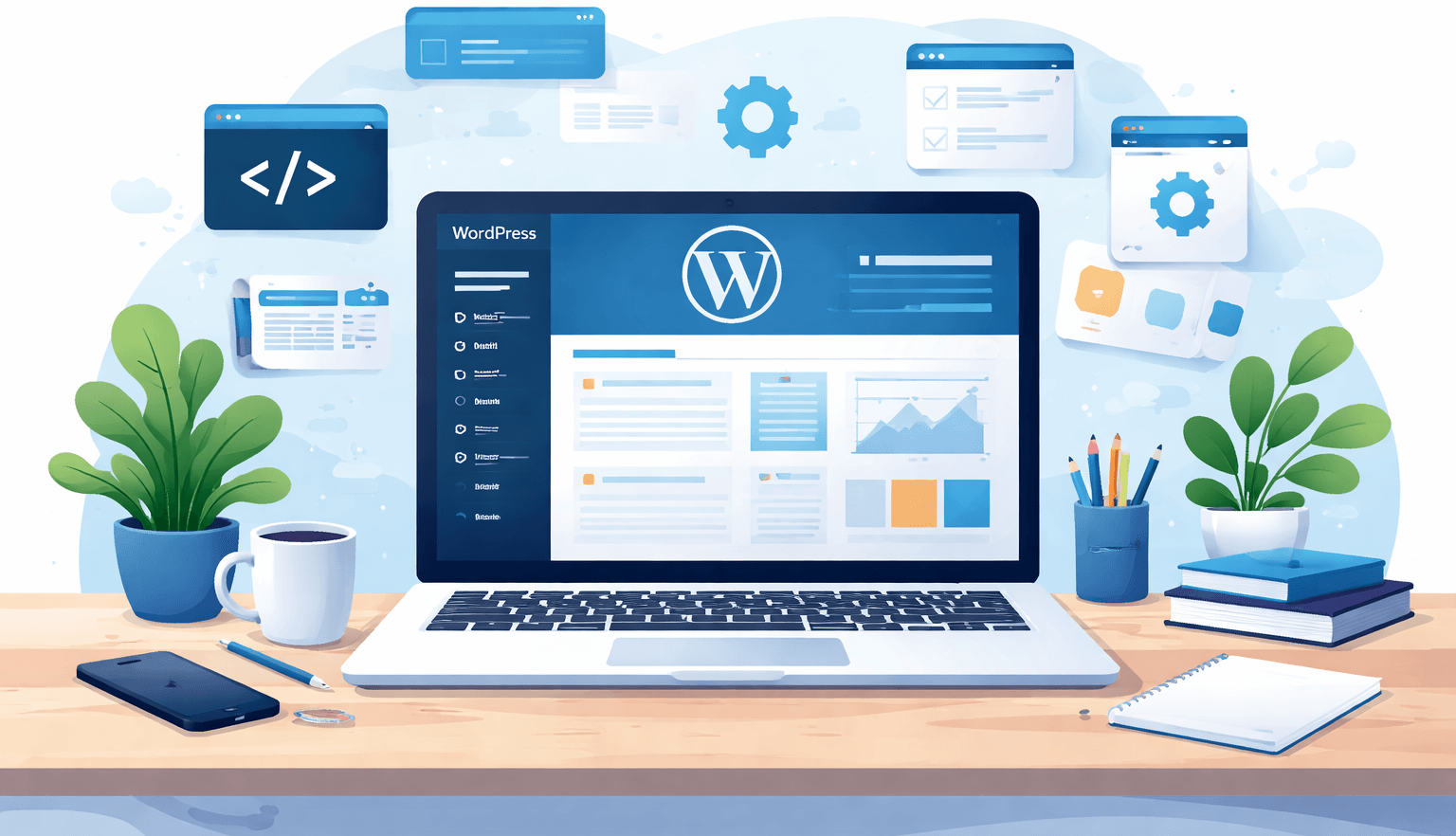
Is WordPress the Best CMS for Building Websites?
Choosing the right content management system (CMS) is one of the most important decisions you’ll make when building a website. Your CMS impacts everything, from performance and SEO to scalability, security, and ease of use.
While there are many platforms available today including Shopify, Wix, Squarespace, Drupal, and Joomla, WordPress continues to stand out as the most flexible, scalable, and future-proof CMS available.
At NDIC, we build the vast majority of our client websites on WordPress. Here’s why.
What Makes WordPress Different?
WordPress powers over 40% of all websites on the internet. That level of adoption isn’t accidental — it reflects trust, flexibility, and long-term reliability.
Unlike proprietary platforms, WordPress is open-source software. This means:
-
It’s not owned by a single corporation.
-
You’re not locked into one vendor.
-
You have full control over your website’s files and data.
-
It benefits from a global community of developers continuously improving it.
This open ecosystem is one of WordPress’s greatest strengths.
WordPress vs. Website Builders (Wix & Squarespace)
Website builders like Wix and Squarespace are popular for their simplicity. They’re often marketed as “easy” solutions for small businesses or startups.
The tradeoff? Limited flexibility and long-term scalability.
Where WordPress Wins:
-
Full ownership: With WordPress, you own your website and hosting.
-
Advanced customization: You can customize functionality beyond templates.
-
SEO control: Full access to technical SEO settings and optimization tools.
-
Scalability: WordPress can grow from a simple brochure site to a complex platform.
Website builders work well for very small, static websites. But when businesses grow and need more integrations, automation, or performance optimization, many outgrow those platforms quickly.
WordPress vs. Shopify
Shopify is excellent for pure eCommerce stores. It simplifies inventory, payments, and checkout processes.
However, Shopify is a closed system, meaning:
-
You pay ongoing platform fees.
-
Custom development is limited by Shopify’s ecosystem.
-
Advanced content flexibility can be restricted.
-
You rely on Shopify’s infrastructure and pricing model.
WordPress, paired with WooCommerce, offers:
-
Lower long-term costs.
-
Greater design flexibility.
-
Advanced customization for complex product logic.
-
Seamless integration with third-party systems.
-
Complete control over hosting performance.
For content-driven businesses or hybrid sites (content + eCommerce), WordPress provides more flexibility than Shopify.
WordPress vs. Drupal & Joomla
Drupal and Joomla are powerful CMS platforms with strong developer communities. However, they are typically:
-
More complex to manage.
-
Less intuitive for non-technical users.
-
Harder to maintain without specialized developers.
WordPress strikes the ideal balance:
-
Developer-friendly when advanced customization is needed.
-
User-friendly for content editors and marketing teams.
-
Easier to maintain and update long term.
At NDIC, we prioritize platforms that empower both technical teams and business owners. WordPress delivers on both fronts.
Key Advantages of WordPress
1. Flexibility for Any Type of Website
WordPress can power:
-
Corporate websites
-
eCommerce stores
-
Membership platforms
-
Learning management systems
-
Non-profit donation portals
-
Booking systems
-
Custom web applications
Few platforms offer this level of versatility without locking you into rigid frameworks.
2. SEO-Friendly Architecture
WordPress is built with clean code and strong SEO foundations. With the right configuration, it allows:
-
Full control of meta titles and descriptions
-
Schema markup integration
-
Custom URL structures
-
XML sitemaps
-
Canonical controls
-
Performance optimization tools
For businesses focused on search visibility, WordPress provides the flexibility needed to compete effectively.
3. Extensive Plugin Ecosystem
One of WordPress’s greatest strengths is its vast plugin ecosystem. From security and caching to CRM integrations and AI tools, there are thousands of extensions available.
At NDIC, we carefully vet plugins for performance and reliability. When necessary, we build custom functionality to ensure long-term stability.
The result? A tailored solution — not a bloated one.
4. Scalability & Performance Optimization
WordPress can handle everything from small business sites to high-traffic enterprise environments — when properly configured.
With managed hosting, caching strategies, CDN integration, and database optimization, WordPress performs exceptionally well.
Unlike closed platforms, WordPress allows full performance control at the server level — a major advantage for growing businesses.
5. Security When Managed Properly
WordPress is sometimes targeted because of its popularity — not because it is inherently insecure.
With:
-
Regular updates
-
Secure hosting
-
Strong authentication
-
Firewall and monitoring tools
-
Proactive maintenance
WordPress can be extremely secure.
At NDIC, our hosting and maintenance processes are built specifically around proactive monitoring and rapid response — ensuring stability and protection.
Why NDIC Uses WordPress
At NDIC, we don’t choose platforms based on trends. We choose what delivers long-term value to our clients.
WordPress aligns with our philosophy because it:
-
Offers full ownership and transparency.
-
Avoids vendor lock-in.
-
Allows advanced customization.
-
Integrates seamlessly with marketing tools.
-
Scales as businesses grow.
-
Supports strong SEO foundations.
-
Provides cost-effective long-term solutions.
Most importantly, WordPress gives our clients control.
We can build simple, elegant sites — or highly customized, complex platforms — all within the same CMS. That flexibility allows us to adapt solutions to each client rather than forcing clients into rigid systems.
The Bottom Line
No CMS is perfect for every situation. However, for the vast majority of businesses seeking flexibility, scalability, SEO strength, and long-term control, WordPress remains the most balanced and powerful option available.
It’s not just popular, it’s proven.
That’s why, at NDIC, WordPress continues to be our platform of choice when building websites designed to perform, grow, and evolve alongside your business.
If you’re considering a new website or evaluating your current platform, our team can help you determine whether WordPress is the right fit for your goals.


Related Posts

Website Hacks Are on the Rise. Is Your Business Protected?
Over the past few years, cybersecurity has become an increasingly...

Schema Markup Explained: A Simple Guide
If you’ve ever noticed star ratings, FAQs, product prices, or...

AI Can Support Your Website, But It Can’t Replace Real Expertise
Artificial intelligence is everywhere right now from writing copy, answering...

One Experiment Worth Trying
If your website is “working,” but you’re not sure it’s...